Book Summary
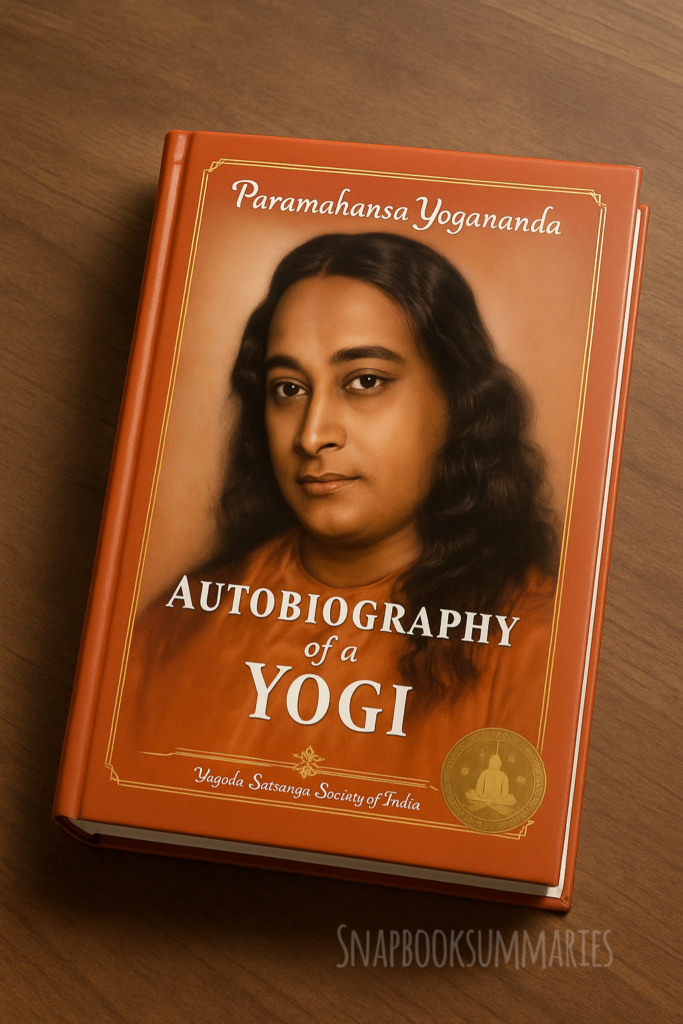
Autobiography of a Yogi is a spiritual classic written by Paramahansa Yogananda in 1946. It narrates his extraordinary life journey, exploring yoga, meditation, and the mystical experiences that shaped his spiritual awakening. The book introduces readers to India’s spiritual traditions, saints, and the science of Kriya Yoga, making it one of the most influential books on spirituality and self-realization.
Key Insights:
1. The Early Life of Yogananda
- Born in 1893 in India, Yogananda (born Mukunda Lal Ghosh) was drawn to spirituality from an early age.
- He had visions and mystical experiences as a child, which deepened his quest for enlightenment.
- His search led him to Swami Sri Yukteswar, his guru, who guided him in Kriya Yoga and self-realization.
2. The Science of Kriya Yoga
- Kriya Yoga is an ancient meditation technique that accelerates spiritual growth by controlling life energy (prana).
- It was revived by Mahavatar Babaji, a legendary yogi who remains an eternal spiritual guide.
- Yogananda describes supernatural experiences, telepathy, and miraculous events that demonstrate the power of yogic practice.
3. Encounters with Spiritual Masters
- Yogananda shares stories of meeting India’s greatest saints and sages, including:
- Lahiri Mahasaya – A householder yogi who brought Kriya Yoga to the world.
- Swami Sri Yukteswar – His strict but loving guru.
- Therese Neumann – A Christian mystic who lived without food for years.
- These encounters highlight the universal nature of spirituality beyond religious boundaries.
4. Journey to the West & Spreading Yoga
- In 1920, Yogananda traveled to America to teach yoga and spiritual wisdom.
- He founded the Self-Realization Fellowship (SRF) in Los Angeles to spread Kriya Yoga worldwide.
- His lectures and teachings attracted thousands, including famous figures like Steve Jobs and George Harrison.
5. The Unity of Science & Spirituality
- Yogananda blends spirituality with science, explaining that meditation and yoga align with modern discoveries in energy, consciousness, and quantum physics.
- He emphasizes the idea that divine consciousness is accessible to everyone through inner discipline and self-discovery.
6. Death & Legacy
- Yogananda passed away in 1952 in a state of deep meditation.
- His book remains one of the most widely read spiritual texts, inspiring seekers worldwide.
- Autobiography of a Yogi continues to bridge Eastern and Western spiritual traditions.
Key Takeaways:
- Kriya Yoga is a powerful path to self-realization and spiritual awakening.
- Spirituality is universal and transcends religion.
- Mystical experiences and miracles are possible through deep meditation.
- Discipline and devotion lead to enlightenment.
- True happiness comes from inner peace, not material success.
Final Thoughts:
This book is a must-read for anyone interested in yoga, spirituality, and self-discovery. It’s not just a biography—it’s a transformational journey that encourages deep reflection on the nature of life and consciousness.